
The Warranty Reserve Fund:
Now that warranty accruals and warranty claims numbers are in the public domain, it's time to look at the differences in warranty reserve fund sizes and the estimates that are used to produce these differences.
Ever watch the meteorologist on a San Diego television station predict the weather? They say it's going to be sunny and 74 degrees, then they fill up the rest of their time slot with jokes and birthday wishes. Further north in places such as Portland or Seattle, they take their weather forecasts much more seriously, because a sudden storm might otherwise surprise their viewers and make them angry at the weatherman.
Warranty accounting practices sometimes seem like a mix of time and temperature readings and weather forecasting. The amounts taken from the warranty reserve fund to pay claims reflect actual conditions, while the amount added to the fund and the size of the fund at the end of the period reflects management's best guesses for future conditions. Sometimes they're accurate and other times they're not, but they always have the option of changing their predictions.
Like the weather, the relationship between the size of the warranty reserve fund and the amount spent during any given period is highly changeable -- not only between companies but also, we suspect, within companies from quarter to quarter. The whole reason for having a warranty reserve fund in the first place is to use it to smooth out the spikes and troughs in warranty claims from month to month. So it is highly likely that the ratio between reserve and claims seen at the beginning of the year will change by midyear and again by year's end.
How Things Work
There's a science to this, but we'll leave that to the accountants and auditors to explain in detail. For now, let's just assume that companies put aside a set percentage of sales each quarter, which they feel is appropriate to finance all future claims for products sold during that quarter. They then pay claims as they arise, using the funds in the warranty reserve. If these inputs and outputs are not approximately the same, the company may need to make a change in estimate, adding or removing funds from the reserve in the process.
 The estimates, however, are simply best guesses, which may or may not prove to be accurate as time goes by. A company may put aside 2% of sales during a given quarter, only to find that because of its high manufacturing quality standards, warranty claims average only 1% for products sold during that quarter. After a few quarters of these imbalances, and after the reserve fund grows needlessly large, such a company may want to make a change of estimate and take some amount of money out of the fund, adding it to the income statement to the delight of shareholders.
Alternatively, a company may put aside 2% of sales, only to find that the product is faulty, and that actual spending is much higher than anticipated. The reserve fund provides a temporary buffer for this unexpected expense, but if the company cannot reduce warranty expense through better manufacturing, it may have to increase the percentage it sets aside for the future, and possibly it may also have to add funds to finance current claims. Shareholders will not be pleased.
There is no "right" way, and there is no "wrong" way. But there most certainly is a whole spectrum of opinion across manufacturers, ranging from companies that size their warranty reserves as if they're expecting a really rainy day to those that seem to plan on nothing but blue skies ahead.
In part, the differences can be explained away by product mix and warranty periods. But the primary reason for the differences is more psychological. Some companies plan conservatively, estimate high, and are pleased when the actual costs prove to be low. Others plan optimistically, estimate low, and have to scramble if the actuals come in higher than they forecast.
First Quarter Spending Patterns
Thanks to the Financial Accounting Standards Board and the reporting requirements of FASB Interpretation No. 45, the results of these predictive exercises are now part of most manufacturers' Form 10-Q and Form 10-K statements. According to documents filed with the Securities and Exchange Commission, the 750 companies that have made recent reports on their warranty activity collectively began the first quarter with a balance of around $32.327 billion in their reserve funds.
During the quarter they spent $5.7 billion on claims, and added $5.9 billion in new funds. As previously discussed in Warranty Week, these figures represented around 1.2% of total revenue, and around 1.9% of warranted product revenue, respectively. In other words, manufacturers spent on average around 1.2% of the current quarter's total revenue and 1.9% of just their warranted product revenue to satisfy claims arising from sales made in past quarters. While the averages can be higher or lower depending upon the industry, these are the rules of thumb that, thanks to FASB, are now part of the public record.
When the set-asides exceed the claims, the warranty reserve grows in size. And indeed, during the first quarter, the amount of new funds added exceeded claims by some $238 million. But there are other factors that can increase or decrease the size of the warranty reserve, most notably a change in estimate or a change in the value of a foreign currency.
Changes in estimates are mid-course corrections made when better information becomes available. A decrease signals management's acknowledgement that their initial estimates were a bit too conservative, and they set aside more than was necessary to cover actual costs. An increase is an admission that they set aside too little when the warranted products were initially sold, and now need to boost their fund balance to pay for the unexpected claims. Decreases are preferred, in that the freed-up funds can be added to income. But increases also are beneficial in that they help avoid warranty cost shocks down the road. Rather than reading about a sharp spike in the cost of sales because of warranty expenses, shareholders instead read that management deems it necessary to boost reserves now to avoid future surprises.
Of the 750 companies tracked, 190 or 25% made changes in estimates: 105 decreases and 85 increases. The biggest decreases came from Ford Motor Co., KLA-Tencor Corp., Lucent Technologies, and Palm Inc. The biggest increases came from General Dynamics Corp., IBM Corp., Boeing Co., Quantum Corp., Cummins Inc., and Maytag Corp.. On balance, the net change for the first quarter was a $200 million upwards change in estimate, the sum of $163 million in decreases and $363 million in increases.
Because some companies issue warranties and pay claims in foreign currencies, they must revalue their reserves during times when exchange rates fluctuate significantly, as is the case now with the dollar depreciating in value against the euro and yen. Only 47 companies made foreign currency adjustments, and 45 of those reflected gains as would be expected in an era of a falling dollar (when foreign currencies increase in value in dollar terms). But only seven of those currency gains exceeded $1 million, and only Ford's and GM's gains exceeded $10 million. On balance, the industry experienced a net gain of $104 million due to exchange rate fluctuations.
The Warranty Reserve
Those adjustments leave U.S. manufacturers with an warranty reserve fund ending balance of about $32.869 billion at the close of the first quarter. Given that their claims totaled $5.7 billion over the three months, their warranty expense was therefore around $1.9 billion per month. This unit we will call a warranty-month: the average amount spent each month by U.S. manufacturers to satisfy warranty claims, derived by dividing quarterly, annual, or semi-annual warranty claims totals by the corresponding number of months.
Here now is the tabular reconciliation of total warranty activity by 750 American manufacturers during the first quarter of 2003 (in US$ millions):
The Warranty Reserve Fund
Aggregate of 750 U.S. Mfg. Cos.
First Quarter, 2003
(all $ in millions)
| Beginning Balance, Dec. 31, 2002 |
$32,327 |
| Spent satisfying claims | ($5,703) |
| New warranties issued | $5,941 |
| Changes of estimate for pre-existing warranties |
$200 |
| Effects of currency conversions | $104 |
| Ending Balance, March 31, 2003 |
$32,869 |
Given those numbers -- $32.869 billion in the reserve funds and $1.901 billion spent per month -- it's a straightforward process to calculate that the industry average reserve-to-claims ratio was around 17.3 warranty-months. This means that companies, on average, held in their warranty reserves at the end of March 2003 around 17 times as much as was spent in any given month during the first quarter. This also means that manufacturers on average could pay claims for the next year-and-a-half, or six quarters, without exhausting their reserves, even if they made no further accruals. But it's just a mathematical average.
No Claims to Report
Keep in mind that 20 companies reported spending exactly $0 on warranty claims during the quarter. They are American Technology Corp.; Cabot Microelectronics Corp.; Computer Access Technology Corp.; Curon Medical Inc.; Energy Conversion Devices Inc.; Evergreen Solar Inc.; GolfGear International Inc.; II-IV Inc.; Interwave Communications International Ltd.; Key Components LLC; Loral Space & Communications Ltd.; Microsoft Corp.; Proxim Corp.; SafeNet Inc.; SBE Inc.; SureBeam Corp.; Taser International Inc.; Tektronix Inc.; Turnstone Systems Inc.; and Vyyo Inc.
These companies can celebrate their good fortune at having no claims. However, their inclusion in the above calculation significantly inflates the weighted average, because they reported $57.7 million in warranty reserves but $0 in claims. Also, they had to be taken out of the list while calculating the individual company-by-company reserve-to-claims ratios so as not to divide by zero. Because these companies spent nothing on warranty, their spending capacity in warranty-months would be infinite and unlimited since no matter what amount they have in their warranty reserve fund, it will last them an indefinite number of months.
No doubt, in future quarters some of these companies will pay warranty claims, and others will add to their reserve funds despite an absence of claims. But if they never experience warranty claims, then the money in their combined reserve funds will eventually find its way into net income through downward changes in estimates.
An additional 116 companies were removed from consideration because either they reported warranty claims data but not warranty accruals (the amount of funds set aside to pay future claims), or they reported the balance of the warranty reserve fund but not the net claims or accruals. In other words, their warranty tables were incomplete, and the claims-to-reserve ratio thus computed would have been inaccurate. We won't list all of them, but some of the biggest companies doing this include Advance Stores Co. Inc.; Emerson Electric Co.; Pinnacle Systems Inc.; SeaChange International Inc.; Select Comfort Corp.; and Zoll Medical Corp.
That still leaves 614 companies that reported fully upon their warranty reserve fund balances, claims and accruals, and who reported claims amounts greater than zero. Only two of these companies had absurdly large reserve-to-claims ratios: medical robotics maker Integrated Surgical Systems Inc. and water purifying equipment maker WTC Industries Inc. Integrated Surgical spent only $1,000 a month on warranty during the first quarter, yet it ended the month of March with $1.059 million in its reserve fund. WTC spent only $131 a month on warranty over the course of the quarter, while keeping a $300,000 reserve fund. Both of their reserve-to-claims ratios were therefore above 1,000 warranty-months.
What follows is a list of some of the larger companies topping the list -- those with the highest claims-to-reserves ratios. These are the companies that are enjoying a warranty claims rate far below what they expected. Or perhaps they foresee a sudden rise in claims rates in the near future, and they're saving for a rainy day. That's why we're calling this list the rainy day fund.
The Rainy Day Fund
Companies with the Highest Ratio
of Warranty Reserves to Claims
($ in thousands)
| Company | Warranty Reserve 3/31/03 |
Warranty Claims per Mo. |
Reserve in Warranty-Months |
| Broadcom Corp. | $4,128 | $18 | 229 |
| Lear Corp. | $38,700 | $200 | 194 |
| Steelcase Inc. | $26,000 | $225 | 116 |
| Brooktrout Inc. | $1,086 | $12 | 93 |
| JDS Uniphase Corp. | $61,500 | $667 | 92 |
| General Dynamics | $218,000 | $3,000 | 73 |
| Andrew Corp. | $9,851 | $180 | 55 |
| Cooper Tire & Rubber Co. | $23,553 | $443 | 53 |
| Monaco Coach Corp. | $30,674 | $694 | 44 |
| Lennox International Inc. | $64,327 | $1,578 | 41 |
Internet equipment maker Broadcom Corp. topped the "rainy day fund" list, with its $18,000 monthly spending and its $4.1 million reserve fund -- a ratio of 229 warranty-months. Automotive interior supplier Lear Corp. was next, with a ratio of 194 based on a reserve of $38.7 million and monthly spending of only $200,000. Four other companies with warranty-months near $200,000 -- RSA Security Inc.; Presstek Inc.; Merix Corp.; and Foundry Networks Inc. -- had reserves between $1 and $3 million in size.
Office furniture and equipment maker Steelcase Inc. kept a $26 million reserve fund on hand, even though claims averaged only $225,000 a month during its latest fiscal year. Therefore, it had enough on hand in March to pay for the next 116 months at current rates of spending. Steady readers will note that Steelcase was among the companies mentioned in the June 23 issue as having an unusually low warranty claims rate as a percentage of sales. Now they're on the list of companies having an unusually large warranty reserve fund, given their low claims rate. What this means is that Steelcase was planning for a deluge but they're instead experiencing sunny days. At some future date, perhaps management will conclude that their products are made so well and will last so long that they can make a change in estimate.
Live Forever?
It is notable that both Steelcase and Lennox International report that some of their products are covered by lifetime warranties, while some of their other products carry 5- and 10-year warranty terms. This helps explain why their planning assumptions call for them to maintain such large reserve fund balances -- anything could happen in the out years. It may be sunny now, but who can predict the weather in 2008 or 2013? Perhaps when long warranties are involved, reserve ratios tend to be a bit larger? Perhaps in certain industries, with certain product lines, conservative planning assumptions are the norm?
Undoubtedly, every company believes its forecasting methodology is an exactly appropriate match for its product line and warranty policies. Brooktrout Inc., best-known as a manufacturer of communications, networking and enhanced fax gear for applications such as speech recognition and voice-over-Internet, spent an average of $12,000 a month on warranty claims, yet its reserve fund neared $1.1 million -- more than 93 months of funding at current rates of spending. It also added just under 0.4% of first quarter sales to its reserve fund, which though it's a low percentage, is actually nearly twice as much as it spent.
Robert Leahy, Brooktrout's treasurer and its vice president of finance and operations, said one reason for the size of Brooktrout's reserve fund was the fact that most of its products are sold with five-year warranties. Therefore, the amount he put aside in the first quarter is intended to fund the warranty claims for $15.5 million-worth of products over the next 60 months. He said that perhaps companies that provide only one-year warranties can get by with much smaller reserve funds, but he has to make sure Brooktrout is covered for contingencies that might arise over a much longer term.
There was nothing unusual, Leahy said, about the $35,000 in warranty claims cost reported by Brooktrout in the first quarter, thus torpedoing the theory that perhaps the company simply experienced less claims than expected. He said both he and the company's auditors are comfortable with the current size of the reserve fund, and believe it's neither too much nor too little to cover the expected amount of future claims.
Leahy also noted that Brooktrout has been making warranty reserve disclosures in its Form 10-K filings long before FASB made the practice mandatory. "From my vantage point, I think this spirit of more disclosure is the absolute right way to do it," he said. "If you were to look at Brooktrout's historical financials, we've always had a fair amount of disclosure that wasn't necessarily required."
He said Brooktrout is therefore quite pleased that from now on, all its competitors in the telecommunications and data communications equipment industry will be making similar disclosures. "I'm of the belief that the more information we can provide to our shareholders and to the investing public, that doesn't compromise our competitiveness in the marketplace, the better. I'm all for it," he said.
Tenth highest among the group was Lennox International Inc., which kept on hand enough to pay for 41 months of claims at current rates of spending. Assistant treasurer Greg Moseman said this reflects the way Lennox operates, tending to be "fairly conservative" in overall accounting practices.
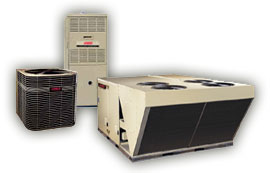 Moseman said Lennox has no qualms about making the FASB-mandated warranty disclosures that document the company's conservative accounting streak. "I think we keep fairly adequate reserves, and certainly don't have any problem about disclosing that information," he said.
Moseman noted that it's always a concern that Lennox is disclosing something which its competitors aren't, but if anything, conservatism seems to run in the HVAC/R family. Competitors such as American Standard (Trane), United Technologies (Carrier), and York International each stood above 20 warranty-months. And almost all the major HVAC players made the required reports (see Warranty Week, June 30 issue).
A Lennox spokeswoman, after checking with the company's controller, noted that the amount currently in the reserve fund is a compilation of estimates made over the lifetime of all products sold to date. "We have some lifetime warranties out there," she said. "We have five- and ten-year warranties. So that's why the reserve is a recommendation that that much should be reserved for long-term potential. Your auditors want you to reserve for all potentials."
Close to the Edge
At the other extreme are companies that see no rainy days ahead, and therefore keep proportionally low levels of reserves on hand to pay for future claims. Only one very small company had an absurdly small reserve-to-claims ratio: ViewCast.com Inc. averaged $18,000 a month in warranty claims, but had only $2,000 left in its reserve fund at the end of the first quarter. Mind you, the company started the quarter with only $39,000 in its reserve fund, and added $16,000 to finance warranties issued for $1.6 million in first quarter sales of Internet video broadcasting equipment. Still, the massive depletion of the reserve fund during the quarter means that the company has on hand only enough to pay for something just short of 3.5 days worth of warranty claims. Obviously, they will have to finance any claims experienced during the second quarter through other means, because their reserve fund is almost depleted.
Companies are free to plan for nothing but sunny days ahead if their auditors agree -- computer software companies do this all the time. They usually don't keep a warranty reserve fund at all. Instead, they immediately expense the small amount of warranty adjustments that they experience. The danger is that if claims rise suddenly and unexpectedly, so will the cost of sales. Therefore, both gross margins and net income will fall, and shareholders will want to know why.
Manufacturers with agreeable auditors can get away with living that close to the edge, but surprisingly few do so. Besides ViewCast.com, only Midas Inc. and Netopia Inc. ended the quarter with a ratio below 1.0 warranty-months. Only five others came in between 1.0 and 2.0 warranty-months, and another eight came in between 2.0 and 3.0 warranty-months. This means that the vast majority of companies ended the first quarter with more in their warranty reserve funds than was spent on claims arising during the three-month period.
Some of the larger companies on the "sunny day fund" chart below issue warranties with terms of one year or less. This might explain why their planning assumptions call for much smaller reserve funds. It's well within their rights to predict that the forecast for the next four quarters will be similar to what they're experiencing now. If they predict sunny and it turns out to be sunny, then they've avoided tying up an extra percentage or two of sales revenue in an unnecessarily large warranty reserve. It might mean the difference between profitability and net loss. Only if reserves one day prove are insufficient to cover a spike in claims and if the company one day suffers a sharp decrease in net income will their shareholders and auditors complain about their forecasting methodology being overly optimistic.
The Sunny Day Fund
Companies with the Lowest Ratio
of Warranty Reserves to Claims
(all $ in thousands)
| Company | Warranty Reserve 3/31/03 |
Warranty Claims per Mo. |
Reserve in Warranty-Months |
| Oakwood Homes Corp. | $8,511 | $2,356 | 3.6 |
| Gateway Inc. | $55,511 | $15,631 | 3.6 |
| Fedders Corp. | $4,536 | $1,307 | 3.5 |
| Genlyte Group Inc. | $1,952 | $601 | 3.2 |
| Helen of Troy Ltd. | $3,263 | $1,048 | 3.1 |
| Cantel Medical Group | $496 | $168 | 3.0 |
| Dixie Group Inc. | $1,204 | $601 | 2.0 |
| Huffy Corp. | $82 | $53 | 1.5 |
| Mohawk Industries Inc. | $6,637 | $5,126 | 1.3 |
| Pep Boys | $911 | $848 | 1.1 |
These are companies that manage their warranty reserve fund like many consumers do their non-interest-bearing personal checking accounts. They keep just enough funds on hand to finance emergencies and avoid overdrafts, but for the most part, the amount they withdraw approximates the amount they deposit. As an example, take a look at lighting fixtures maker Genlyte Group Inc. or hair care appliance maker Helen of Troy Ltd. Genlyte added $1.9 million and subtracted $1.8 million from a reserve fund that remained around $2 million in size during the first quarter. Helen of Troy added $12.4 million and subtracted $12.6 million over the course of its latest fiscal year, but its reserve fund was only $3.3 million in size. Therefore, while both these companies paid their claims and planned for future claims, the cushion on which they chose to operate was just over three warranty-months in size.
Mohawk Industries Inc., makers of carpets and tiles for home and office, chooses to operate with one of the lowest reserve-to-claims ratios in the manufacturing sector. The company, which added $14.8 million to its reserves and spent $15.4 million on warranty claims during the first quarter, did so with a reserve fund that shrank from $7.2 million to $6.6 million over the period. Given that the company is spending a little more than $5.1 million per month on warranty claims, this represents a reserve-to-claims ratio of only 1.3 warranty-months. Among larger companies, only Pep Boys dared live closer to the edge.
But it works for Mohawk. The company has been around for 120 years, and this method of financing warranty claims has worked so far. "I don't read anything special into it," commented chief financial officer John D. Swift when asked about the ratio. "It's reflective of what we have in expected claims to come through, and that's what it reflects: what we really think is going to be coming through out of our current outstanding liabilities. All I can tell you is we believe that's representative of what we have outstanding as liabilities at this point in time."
So let's assume that ratios over 1,000 warranty-months are incredibly large, and that ratios below one warranty-month are incredibly small. Those are the lips of the bell curve -- the extremes of optimism and conservatism. So where's the middle? What is the size of the typical manufacturer's warranty reserve fund, as a multiple of their monthly claims rate?
As mentioned, the weighted average is 17.3 warranty-months -- $32.87 billion in reserves divided by $1.9 billion a month in claims. But that's not a reliable number for two reasons. First, it includes the 17 companies that reported no claims at all, and it includes all the companies that made insufficient disclosures about their warranty claims and accruals. Second, it is heavily weighted by the likes of GM, Ford, HP, Dell, IBM, and GE, who together account for 60% of the total warranty reserves and 56% of the warranty claims. Their collective claims-to-reserves ratio is 19 warranty-months, so in effect their weight is what's determining the weighted average.
It would be better to look for another midpoint, namely the median. This is the point at which half the ratios are higher, and half the ratios are lower. Since each ratio is the result of the planning assumptions of an individual company, the median would be the point at which half the assumptions are more optimistic, and half the assumptions are more conservative. This would be the consensus estimate of 614 different chief financial officers, 614 different warranty managers, and 614 different auditors.
Industry Benchmarks
In order to look for the typical warranty reserve-to-claims ratio within this group, the list was split into two equal-sized groups: 307 companies above the median and 307 below the median. The company left in the exact middle of these two groups was, appropriately enough, the Middleby Corporation, with $11 million in its reserve fund and monthly claims of $772,000 -- a reserve-to-claims ratio of 14.2.
Slightly below that median were companies such as AutoZone Inc. (13.5); Tellabs Inc. (13.5); ArvinMeritor Inc. (13.8); Exide Technologies (14.0); and Powerwave Technologies Inc. (14.1). Slightly above that median were companies such as Rockwell Automation (14.3); Danaher Corp. (14.3); Beazer Homes USA Inc. (14.6); Juniper Networks Inc. (15.0); and Harris Corp. (15.1). There were many smaller companies that also fell within that range of 13.0 to 15.4 warranty-months -- a total of 63 companies. So that's the median.
This range of 13.0 to 15.4 warranty-months, we believe, is the "sweet spot" of the warranty reserve chart. Anything over 15.4 warranty-months reflects conservative estimates, while anything below 13.0 warranty-months reflects optimism. The further above or below this range a given company is, the more conservative or optimistic is their prediction of future warranty claims. But really, anything between 10 and 20 warranty-months is common and typical. A total of 218 manufacturers were in a range of 10 to 20 warranty-months. Around 190 were below 10 months and 206 were above 20 months. So 10 to 20 is the middle third -- not too high, not too low.
Even outside this range, though, a forecaster can point to large and long-established manufacturers who are outside the consensus. Among the largest companies above 20 months were Boeing Co. (40); General Electric Co. (21); General Motors Corp. (24); Tyco International Ltd. (29); and United Technologies (29). These manufacturers are more conservative than is common and typical, and are best positioned to weather a storm. Among the largest companies below 10 months were Cisco Systems (9.2); Goodyear Tire & Rubber (4.8); IBM Corp. (9.8); Sun Microsystems (7.6); and Whirlpool Corp. (4.9). These are the large manufacturing companies that are the most optimistic about their future claims rates.
Don't Need a Weatherman?
So be it. If you're the weatherman in San Diego and you say it's going to be sunny and 74 degrees for the next nine months, who's to argue with your predictive powers if you're right? And if you're a weatherman in the Pacific Northwest and you predict rain half the time, you're probably going to be right. Nobody's making predictions they don't believe. And everybody's looking to others to see if their predictions are in line with the consensus.
In this case, the consensus of 614 different CFOs as expressed through the amount of reserves they keep is that the fund should be large enough to pay roughly 10 to 20 months. The median is 14.2 months, and the mean is 17.2 months. The mode, by the way for you statisticians, is 12. The standard deviation is an unusually large 119, showing how wide a variance there really is.
Thanks to FASB and these newly-required 14(b) warranty tables, everybody can now look up their competitors' warranty numbers quickly and accurately. This means that in the future there will be a little more science and a lot less art involved in the process of forecasting for future warranty expense. Once all the treasurers, controllers, and CFOs get a good look at the disclosures FASB has brought us for the first quarter, it's highly likely that numerous changes in estimate will be made.
| Back to Part Five |